
How can something that begins so badly turn out to be so good?
Importantly I am not talking about the event itself here, but about the fact that my phone was stolen during the afternoon of my first day at the event (long story…) and I hadn’t had a chance to back it up so all the photos I took on that day were lost. Hopefully, other than the club cars that were only there for the Saturday, I’ve been able to replicate many of them with the new phone I bought later the same day.
The thing is that September is always a good month for me in terms of classic car events – the Hampton Court Concours followed by the Castle Coombe Autumn Classic (a new “tradition” for me) and then the Goodwood Revival, on consecutive weekends. In recent years these have – except for the Revival – been accompanied by fine weather, and in the case of Hampthon Court this year the palace of Henry VIII alongside the River Thames was again bathed in sunshine over the weekend for its eleventh iteration at this stunning location.
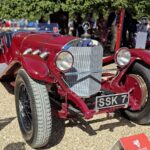
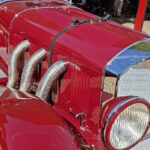
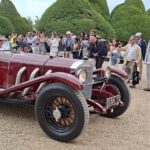
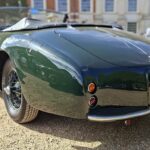
Each year, the Concours attracts some of the world’s most exclusive, expensive and exquisite classics, creating so much sensory overload that it’s hard to pick highlights. But I will try, starting with one of the older cars on show and the eventual Best of Show winner – an awesome 1928 Mercedes-Benz 710 SSK Roadster. Designed by Ferdinand Porsche (senior), it couldn’t be more different than Herr Porsche’s most famous design, the VW Beetle. Only 33 SSK’s were built, about half of them road cars – but the SSK was also a successful racing car and many were crashed, leaving just a handful of original examples, so it was a rare privilege to see this one.
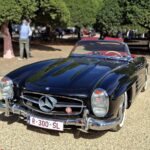
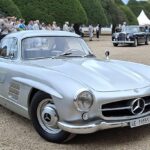
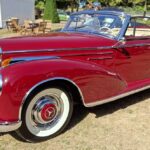
There was also a fine trio of 1950’s Mercedes on show – a great pairing of 300SL roadster and gullwing and a superb red 300Sc Roadster (courtesy of Mercedes-Benz Classic), one of just 53 produced and as such, another rare example of the marque.
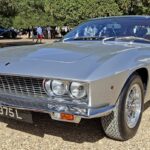
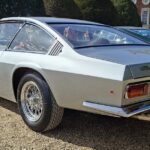
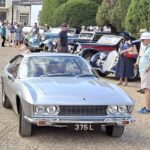
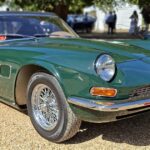
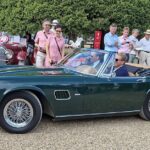
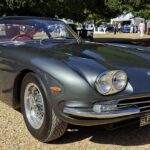
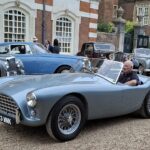
Making a first appearance at the Concours was a fabulous 1971 Monteverdi 375L High Speed in silver – I’ve only ever seen one before about ten years ago; what a motor car! The svelte body was built by Fissore and powered by a 7.2-litre Chrysler V8 producing a claimed 375bhp (hence the name, although these were SAE horses), creating a high-class GT touring car in the same bracket as the Aston Martin DB6, Jensen Interceptor and quite similar AC 428, a lovely dark green convertible version of which was also in the Concours. Brought over from Australia, this is the only RHD Monteverdi 375L still on the road in the UK.
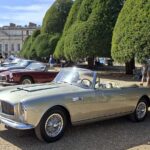
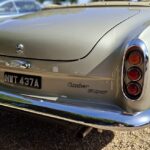
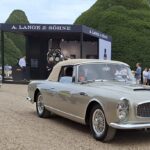
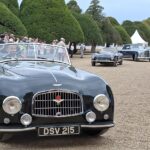
Switzerland has never been a hotbed of motor industry activity, but besides the Monteverdi there were a couple of examples of the work of Swiss coachbuilder Herman Graber on display in the elegant shape of a 1963 Alvis TD21 Series III and a less elegant – to my eyes, at least -1952 Aston Martin DB2 Drophead. The DB2 was particularly interesting – owned by a very fortunate 18-year-old who had been gifted the car by his father but couldn’t get insured to drive it yet, this was the sole survivor of only three built, while the Alvis was built in slightly greater numbers, some 93 in all, and in fact the revived Alvis Car Company has recently started producing continuation versions of this and other models from the marque’s past.
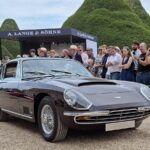
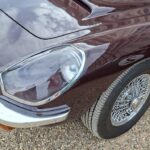
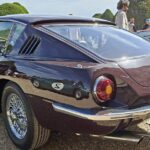
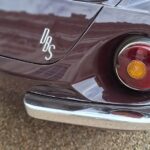
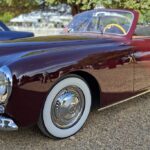
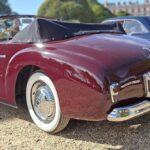
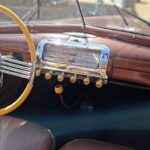
Aston Martin was the dominant marque in the Concours, with no fewer than 17 examples of the British marque taking part, dating from 1927 to 2026, with the most interesting being a 1966 DBSC prototype. Having been involved in the DB4, DB5 and DB6, the DBSC was effectively Touring’s pitch to build the successor to the DB6. Finished in Black Cherry, the car at Hampton Court was one of just two built and is an intriguing “What if?” into what might have been for Aston Martin, who decided to develop the DBS instead – were they right?
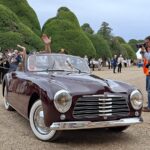
What else? How about the unique Italian designed, French-built 1949 Simca 8 Sport Cabriolet? Based on a FIAT 1100S with a body designed by Pinin Farina and built by Facel, this relatively humble but very pretty cabriolet remained the only one of its kind, although over 112,000 examples of other versions of the Simca 8 were sold. Beautifully nut-and-bolt restored from a barn-find by a delightful Dutch couple and a team of neuro-diverse young people, only one new part – a sill – was required; everything else was on the original car but restored to as-new quality.
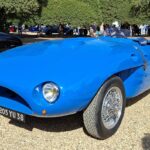
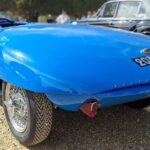
Another unique car was the small, delicate 1953 Barbier Peugeot 203 in French Blue. Using the chassis of a 1950 Peugeot 203 A, the car was completed in 1953 with a lightweight aluminium body that weighed just 45kg. The car enjoyed considerable success in competition during the 1950s, including second place at the 1954 Monte Carlo Rally
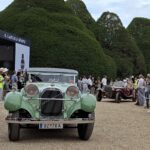
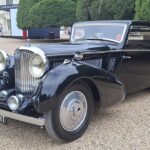
European coachbuilders in the 1930’s created some of the most dramatic, flamboyant designs in motoring history, all sumptuous curves and exquisite details such as the 1936 Bugatti Type 57 Atalante, a car used personally by Ettore Bugatti himself. Only 33 examples were built, and this one was one of only ten originally delivered with a roll-top roof. Beautiful.
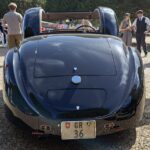
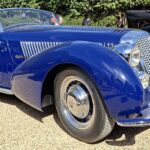
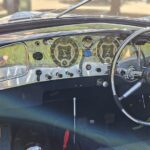
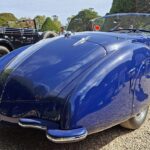
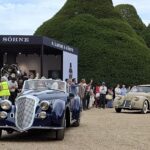
A near contemporary of the Bugatti was the magnificent 1938 Alfa Romeo 8C 2900B Cabriolet by Farina – unique and glorious in a gorgeous shade of deep blue and a definite highlight for me.
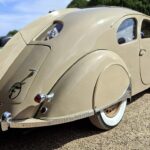
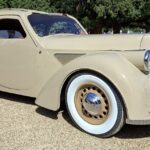
And then there was the unusual 1939 Voisin C30, one of only 5 remaining, with unique aero bodywork not dissimilar to a Tatra 97, and with similar huge rear three-quarter blind spots…not as delicious as either the Alfa or Bugatti, but no less intriguing.
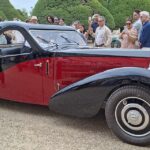
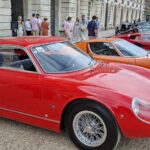
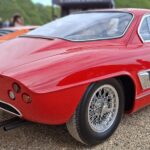
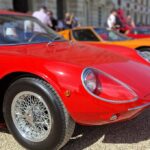
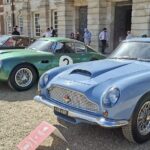
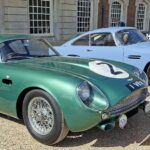
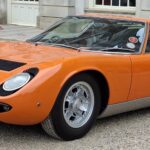
The rarities kept on coming…I last saw an ATS 2500 at the Concours three years ago; this lovely 1964 example in red (an Alfa Romeo rather than Ferrari shade) was displayed in front of the palace’s main entrance as part of a breathtaking row that included a 1970 Lamborghini Miura, a ’76 Countach and a trio of Aston Martins – the DBSC, a DB4 GT Zagato and a Wedgwood Blue 1960 DB4 GT.
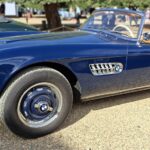
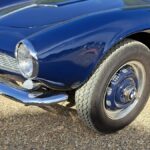
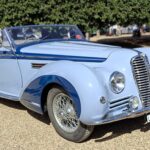
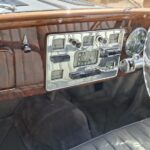
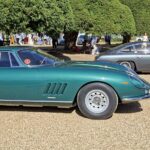
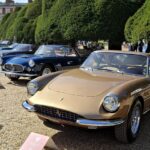
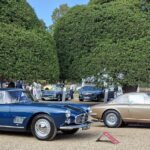
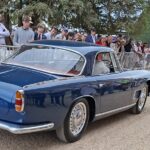
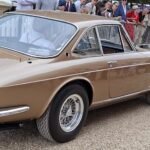
Other personal favourites included a wonderful BMW 507 in dark blue, a gold 1967 Ferrari 330 GTC, a Lamborghini 400GT – my favourite Lamborghini – from the same year and in contrast, a 1947 Delahaye 135MS buy Henri Chapron, with its extraordinary translucent steering wheel and switchgear. All are examples of automotive high art.
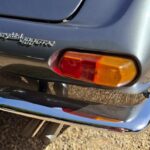
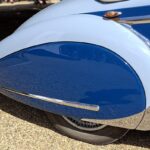
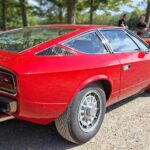
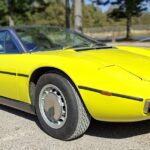
The Concours itself was complemented by a series of club displays, the best of which I felt was from the Maserati Club, with an absolutely sensational line up comprising of an Indy, Kyalami, Merak, a second Indy, a fantastic yellow Bora, a Mexico, a Sebring – I would have been delighted to own any one of them, but especially the Bora.
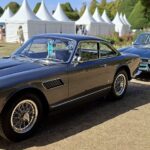
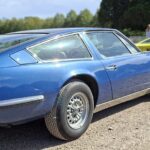
In addition, several high-end dealers pay good money to persuade you to part with yours, and the one I think I would have splashed my imaginary lottery-winning cash on was the stunning 1963 Ferrari 250GT Lusso on the Joe Macari stand, but there were also other options…
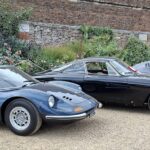
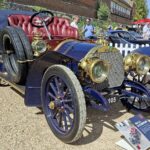
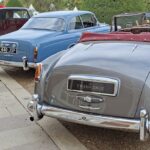
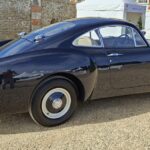
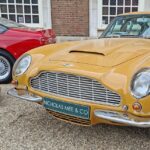
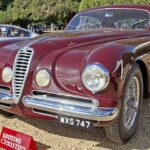
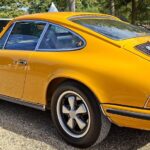
And there was still more…20 classics driven to the show by their women owners, in honour of the first English female racing driver, Dorothy Levitt, as well as 30 cars owned by the future of our hobby, young people under the age of 30, from which my pick was obviously the yellow Porsche 911E.
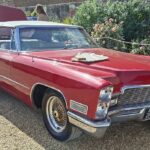
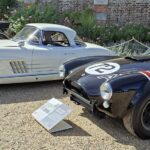
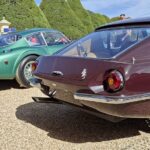
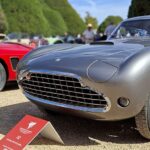
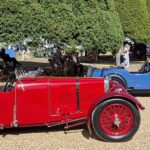
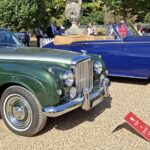
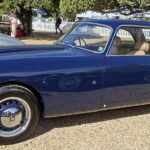
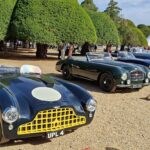
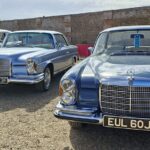
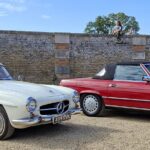
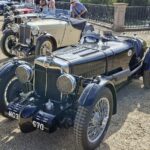
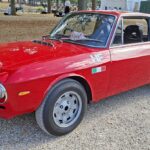
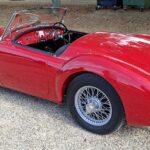
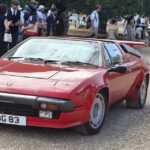
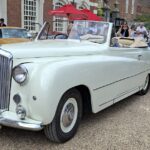
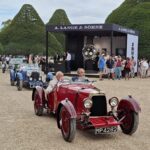
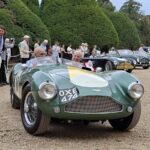
Wonderful though it was, I couldn’t help feeling that there was something missing from this year’s Concours, and I think it was the lack of one or two truly showstopping cars that had graced previous events – I’m thinking of the likes of Porsche 917’s, Ford GT40’s or Ferrari 250GTO’s. Nevertheless, the Hampton Court Concours has long been one of the highlights of my classic year, and this edition was no exception. Check out the gallery below for more images from a superb weekend.
Thanks for the report, to me the show looks fantastic, I would love to have been there, many rarities you don’t get to see so often.I can relate to something are missing sometimes on a show, but I often remind myself, that because I have laid eyes on to many cars and develop a blind spot for the rest, then I find joy in something unloved ,like a odd underdog on a show…
@keld – please don’t misunderstand me, I still enjoyed the show enormously, there just wasn’t that showstopper car that the event so regularly delivers, but it was still great – perhaps we get spoiled by all the fabulous cars we see, as you say. As for the underdog – the lovely Simca 8 Sport Cabriolet and the story behind it’s restoration filled that spot very well!
Oooh, that Aston Martin DBSC by Touring! What a lovely thing – and as one I have never seen in real life would probably top my list.
And regarding the question whether Aston Martin were right in their choice of going with the DBS instead? Yes, they were right: The DBS was the more modern design and I guess you could say better resolved too. But now, sixty years later and with the benefit of heavily rosetinted glasses, I do in fact prefer the DBSC…
The ATS 2500? I too have seen them a few times and always appreciate those rare occasions. A brilliant, brilliant car – and history. Well, I guess you could say that even the failure of the project was brilliant!
@ce – re the DBSC, I have to agree that the decision to go with the DBS was the right one, for the reasons you state. The DBSC is a lovely thing, though…
@Tony
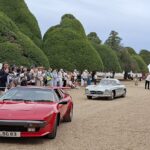
Thanks very much for the pictures, but I see a red Khamsin and a blue Indy.
@frans – yes, my error – good spot!